Open safety recalls, the components owners report failing most often, crash-test results and running costs for the 2019 Buick Cascada, assembled from NHTSA and EPA records.
Everything on this page applies to the model as a whole. Run its VIN to decode that exact car, its engine, trim, assembly plant and factory equipment, alongside these records.
Open a VIN recordRecalls and complaints are filed against a specific model year, so figures differ from one year to the next even within a single generation. See every Buick Cascada year.

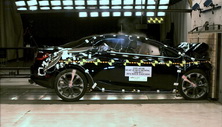
NHTSA frontal crash test
Rated configuration: 2019 Buick Cascada C FWD
The parts named most often across 5 owner complaints filed with NHTSA for this make, model and year.
Complaints are self-reported and skew toward problems people find alarming, so read this as where to look rather than as a defect rate.
I am reporting the malfunction and separation of the rear window from the cover. This is a safety issue as there is the potential for it to come off while driving and possibly causing an accident. It started small, but has grown to almost 12 inches. I have not yet found anyone who has the capacity (or desire) to fix this. And those that actually want to take on such a project are charging over 5,000! Please help!
The contact owns a 2019 Buick Cascada. The contact stated that while driving at an undisclosed speed, the accelerator pedal was depressed; however, the vehicle failed to accelerate as intended. The vehicle lost motive power. In addition, the transmission and engine failure warning lights were illuminated. The vehicle was towed to the dealer, where it was diagnosed with turbocharger failure. The contact was informed that the turbocharger needed to be replaced. The vehicle was not repaired. The contact was informed that the parts were out of stock and on back order. The contact was informed that the repair was not covered under warranty, and the vehicle was 100 miles over the warranty limitation. The contact researched and stated that the failure was a known failure with the vehicle. The manufacturer was made aware of the failure, and a case was filed. The failure mileage was 50,100.
The contact owns a 2019 Buick Cascada. The contact stated that the convertible top rear glass had significantly detached from the top cover material. The vehicle was taken to the dealer, where it was determined that the entire convertible top needed to be replaced. The vehicle was not repaired. The contact related the failure to TSB Number: 17-NA-216 (Convertible Top Back Glass Separation from Top Cover Material). The manufacturer was notified of the failure. The failure mileage was approximately 50,500.
The contact owns a 2019 Buick Cascada. The contact stated that the rear windshield was separating from the convertible top plastic frame. The contact stated that the rear glass was pushing upward and out of the frame. The contact had called a dealer and discussed the failure and was advised that the manufacturer had issued Technical Service Bulletin: 17-NA-216 for the separation of the rear glass of the convertible top. The contact was advised by the service department that the repair would not be performed by the dealer. The vehicle was not repaired. The manufacturer was informed of the failure and referred the contact to the NHTSA Hotline to report the failure. The failure mileage was approximately 53,000.
The contact owns a 2019 Buick Cascada. The contact stated while driving at an undisclosed speed during a rainstorm, water started entering the vehicle through the rear windshield. The contact stated that the rear windshield was separating from the seal. No warning lights were illuminated. The vehicle was taken to the dealer, who diagnosed a failure with the rear window sealant, allowing the rear window to separate from the top material. The vehicle was not repaired. After investigating the failure, the contact related the failure to Technical Service Bulletin Number: 17-NA-216. The manufacturer was notified of the failure and referred the contact to the NHTSA Hotline for assistance. The failure mileage was 38,000.
Over 5 years this costs $5,000 more in fuel than an average new vehicle.
HTTP 400 Bad Request