Open safety recalls, the components owners report failing most often, crash-test results and running costs for the 2016 Nissan Altima, assembled from NHTSA and EPA records.
Everything on this page applies to the model as a whole. Run its VIN to decode that exact car, its engine, trim, assembly plant and factory equipment, alongside these records.
Open a VIN recordRecalls and complaints are filed against a specific model year, so figures differ from one year to the next even within a single generation. See every Nissan Altima year.
Over 5 years this costs $750 more in fuel than an average new vehicle.
NHTSA lists 4 recalls for this make, model and year. Recalls apply to the model, so some may already be fixed on this specific car. A dealer can confirm from the VIN.
Issue: Nissan North America, Inc. (Nissan) is recalling certain 2015-2017 Altima vehicles, previously remedied under recall number 17V-040. The door latch-lock cable may not have been routed properly in the rear door when the remedy was applied. As a result, the cable may interfere with the window regulator causing the rear passenger door to unlatch and inadvertently open without warning when the window is lowered.
Risk: If the rear passenger door opens while the vehicle is moving, the rear passengers have an increased risk of injury.
Remedy: Nissan will notify owners, and dealers will secure the latch-lock cables in the correct position using the new remedy procedure, free of charge. The recall began February 5, 2019. Owners may contact Nissan customer service at 1-800-647-7669.
Campaign 18V915000
Issue: Nissan North America, Inc. (Nissan) is recalling certain 2015-2017 Altima vehicles. The rear door latch/lock cable on the vehicles may have been improperly routed. As a result, lowering a rear window may inadvertently cause that door to unlatch and open.
Risk: If the rear passenger doors inadvertently open while the vehicle is in motion, it may increase the risk of injury to the rear passengers.
Remedy: Nissan will notify owners, and dealers will correct the rear door latch/lock cable routing, free of charge. The recall began on February 16, 2017. Owners may contact Nissan customer service at 1-800-647-7261.
Campaign 17V040000
Issue: Nissan North America, Inc. (Nissan) is recalling certain model year 2016-2017 Nissan Maxima, 2013-2016 Nissan Altima, NV200, LEAF, Sentra, and Pathfinder, 2014-2016 Nissan NV200 Taxi, Infiniti QX60, QX60 Hybrid, and Q50 Hybrid, 2014-2017 Nissan Rogue and Infiniti Q50, 2015-2016 Nissan Murano, Murano Hybrid, and Chevrolet City Express, 2014-2015 Nissan Pathfinder Hybrid, and 2013 Infiniti JX35 vehicles. In these vehicles, the front seat passenger Occupant Classification System (OCS) may incorrectly classify an adult passenger as a child or classify the seat as empty despite it being occupied. As a result, the passenger frontal air bag may be turned off and not deploy in the event of a crash.
Risk: If the passenger frontal air bag does not deploy as intended in the event of a crash, the passenger is at an increased risk of injury.
Remedy: Nissan will notify their owners. Chevrolet City Express owners will be notified by General Motors. Dealers will reprogram the Air Bag Control Unit (ACU) and OCS Electronic Control Unit (ECU) in Altima, Maxima, Murano, Rogue, and Sentra vehicles, and replace the OCS ECU in LEAF, NV200, NV200 Taxi, Pathfinder, Infiniti Q50, JX35, and QX60 and Chevrolet City Express vehicles, free of charge. Interim notices were sent to owners on May 31, 2016. Owners will receive a second notice when remedy parts become available. Owners may contact Nissan customer service at 1-800-867-7669, Infiniti customer service at 1-888-833-3216 or Chevrolet customer service at 1-800-222-1020.
Campaign 16V244000
Issue: Nissan North America, Inc. (Nissan) is recalling certain model year 2013-2018 Nissan Altima vehicles. If the primary hood latch is inadvertently released, there is an increased likelihood that the secondary hood latch may corrode over time.
Risk: Corrosion to the secondary latch may cause it to bind and remain in the unlatched position when the hood is closed. If the primary latch is inadvertently released again and the secondary latch is not engaged, the hood could unexpectedly open while driving, increasing the risk of a vehicle crash.
Remedy: Nissan will notify owners, and dealers will install a stronger release spring in the hood release lever, a warning label near the secondary hood latch, and an Owners Manual addendum card with instructions on how to lubricate and maintain the secondary hood latch mechanism, free of charge. Owner notification letters were mailed June 30, 2021. Owners may contact Nissan customer service at 1-800-867-7669. Note: Recall 16V-029 remains open for any unremedied 2013-2015 Altimas and this recall applies to all vehicles covered by 16V-029 even if those repairs have already been performed.
Campaign 20V315000

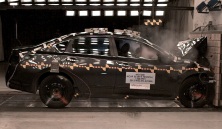
NHTSA frontal crash test
3 open NHTSA investigations into this model. Investigations come before recalls, so these are potential defects not yet covered by one.
Rated configuration: 2016 Nissan Altima 4 DR FWD
The parts named most often across 553 owner complaints filed with NHTSA for this make, model and year.
1 crash
8 crashes · 1 fire · 7 injured
2 crashes · 7 injured
1 crash
Complaints are self-reported and skew toward problems people find alarming, so read this as where to look rather than as a defect rate.
1 complaint-reported fatality on this model.
The HVAC system in my 2016 Nissan Altima produces cold air, but the airflow is not properly directed through the dashboard vents toward the occupants. Instead, the airflow is primarily directed toward the floor and windshield. This problem has continued throughout the summer of 2026. I have two children, ages [XXX] and [XXX], who ride in the vehicle. My [XXX] daughter rides in the vehicle frequently because I transport her to and from her year-round school. She has repeatedly complained about being extremely hot in the vehicle and has become visibly red and sweaty because the cold air is not adequately reaching the passenger area. My [XXX] son has also been affected by the heat. I have tried to compensate by driving with the windows and sunroof open to create additional airflow. However, this does not adequately address the problem when the vehicle is stopped or moving slowly. On XXX, while waiting in a drive-thru with several vehicles ahead of me and vehicles behind me, my [XXX] daughter repeatedly said that she was very hot. She became visibly red, sweaty, increasingly uncomfortable, and eventually began crying because of the heat. I could not immediately exit the line because vehicles were positioned both in front of and behind my vehicle. This incident caused me serious concern about continuing to transport my children under these conditions. I previously took the vehicle to an independent repair facility regarding the HVAC problem and was advised that this repair needed to be addressed by a Nissan dealership. I subsequently contacted a Nissan dealership regarding diagnosis and repair. This vehicle has also experienced two previous transmission failures and a prior A/C compressor failure. The manufacturer previously provided assistance with repairs involving the transmission and A/C compressor. I am reporting the current HVAC airflow failure because I am concerned about the safety consequences of conditioned air not being adequa INFORMATION REDACTED PURSUANT TO THE FREEDOM OF INFORMATION ACT (FOIA), 5 U.S.C. 552(B)(6)
To recap: •Nissan manufactured defective transmissions. •Nissan granted me a warranty extension with a fleeting expiration date (2023) to shift the cost away from them. •In 2020, Nissan performed work on my car. The work they performed masked the problem, didn’t fix it. And it deferred the problem, “kicking the can down the road.” •In 2026, Nissan denied my claim for goodwill approval. •I paid for a piecemeal fix on the car, leaving all the other transmission components still at risk. •My car, with 44,000 miles, is not safe.
The contact owns a 2016 Nissan Altima. The contact stated that the driver's side headlight had become inoperable. The vehicle was taken to a dealer, where it was diagnosed with an internal headlight failure, and it was determined that the headlight assembly needed to be replaced. The vehicle was not repaired. The manufacturer was not notified of the failure. The failure mileage was approximately 165,000.
My 2016 Nissan Altima has approximately 68,900 miles. When I am stopped and press the gas pedal, the vehicle sometimes hesitates before it begins moving. It does not accelerate normally, which is dangerous when I am pulling into traffic, crossing an intersection, or making a turn. At other times while driving, the vehicle will not accelerate properly and appears to become stuck in a low gear. The engine RPM may rise to approximately 4,000, but the vehicle does not shift or increase speed normally. Turning the vehicle off and restarting it may temporarily make the problem go away, but it can happen again without warning. There is currently NO CHECK ENGINE light or other warning light that has ever come on. So I had the auto parts store attach an OBD-II scanner and the ONLY error code was P0776. This prompted me to research further and that is when I learned of the CVT issues with Nissan. Because the loss of acceleration and failure to shift are intermittent, I cannot predict when the vehicle will hesitate or fail to respond. I am concerned that I could be struck by another vehicle if this happens while entering traffic, crossing an intersection, or attempting to maintain speed.
There is an active recall for the generic 2016 Nissan Altima OCS sensor, but it does not apply to my specific VIN apparently. This sensor is a problem with other vehicles of the same year, make, and model, but I am apparently on the hook for almost $1000 repair cost because the recall did not extend to my VIN. Again, same year, make, model, and issue as other 2016 Nissan Altimas, but the recall did not extend for some reason.
Hood popped up while driving and smashed windshield and did additional body damage. Secondary hood latch safety mechanism was non operable according to mechanic who looked at it after incident. Hood latch was replaced as part of recall in 2022. Spoke to Nissan but they are dismissing because there is no open recall and because it was already fixed. Many online comments about others dealing with this same issue of failure after repair and Nissan not taking responsibility.
Upon impact driver's side and passenger side airbags did not deploy.
The headlights on this vehicle are very dim because of a defect by the manufacturer. The inside of the headlight has delamination and causes the lights to be very dim which is a hazardous situation when driving at night. A recalled was issued, but has since expired. Dealer wants to charge over 1800 to replace both headlights.
3 days before the incident the check engine light came on but went off the next day. I was driving home from an overnight shift on Sunday, July 5th when I heard a loud boom the car instantly began to sound like something was dragging on the ground, the car was shifting right no matter which way I turned the steering wheel. I pulled over checked underneath the vehicle noticed this piece dragging I immediately called a tow. A mechanic took a look and stated the control arm has snapped and deemed the car unsafe to operate. I am financing this vehicle and it has only been a year even with routine maintenance and the upkeep of the vehicle since about a month or 2 after purchasing the vehicle I’ve been having major issues
My daughter was driving down the road and came to a 2-wayy stop. Went to pull out and the car stalled and started shuddering. On down the road leaving a red light it did the same thing and not wanting to really go.
Headlights on vehicle are very dim and often do not appear to be on causing bright lights to be used in replacement. Lights are not burnt out.
The contact owns a 2016 Nissan Altima. The contact stated that while driving at undisclosed speeds, the vehicle was difficult to control at higher speeds. Upon inspection, the contact discovered that the rear passenger’s side wheel was misaligned, and the rear control arm was fractured and had detached. The vehicle was towed to the dealer, and it was determined that the rear control arm needed to be replaced. The vehicle was not repaired. The manufacturer was made aware of the failure, and a case was filed. The failure mileage was approximately 211,000.
Showing 12 of 553 complaints.