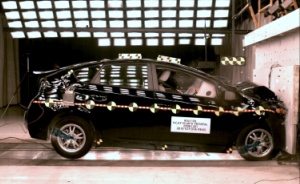
Open safety recalls, the components owners report failing most often, crash-test results and running costs for the 2010 Toyota Prius, assembled from NHTSA and EPA records.
One specific car
Checking one Toyota Prius?
Everything on this page applies to the model as a whole. Run its VIN to decode that exact car, its engine, trim, assembly plant and factory equipment, alongside these records.
Recalls and complaints are filed against a specific model year, so figures differ from one year to the next even within a single generation. See every Toyota Prius year.
NHTSA Recalls
Safety recalls
10 open
NHTSA lists 10 recalls for this make, model and year. Recalls apply to the model, so some may already be fixed on this specific car. A dealer can confirm from the VIN.
HYBRID PROPULSION SYSTEM04/10/2018
Issue: Toyota Motor Engineering & Manufacturing (Toyota) is recalling certain 2010-2014 Toyota Prius and 2012-2014 Toyota Prius V vehicles. Excessive voltage in the Intelligent Power Module (IPM) within the inverter may cause the hybrid system to shut down, causing the vehicle to stall while being driven.
Risk: If the hybrid system shuts down unexpectedly, it can increase the risk of a crash.
Remedy: Toyota will notify owners, and dealers will update the software for the motor/generator control electronic control unit (ECU) and the hybrid control ECU as necessary, free of charge. The recall began January 22, 2019. Owners may contact Toyota customer service at 1-888-270-9371. Toyota's number for this recall is J0V. Note: The software updates in this recall are needed even if the vehicle had the software previously updated under recalls 14V-053 or 15V-449.
Campaign 18V684000
AIR BAGS:SIDE/WINDOW30/06/2016
Issue: Toyota Motor Engineering & Manufacturing (Toyota) is recalling certain model year 2010-2012 Toyota Prius, 2010 and 2012 Toyota Prius Plug-in Hybrid, and 2011-2012 Lexus CT200h vehicles. A weld in the curtain shield air bag inflator may crack causing one or both portions of the inflator to eject into the passenger cabin.
Risk: If either portion of the curtain shield air bag inflator ejects into the passenger cabin, there is an increased risk of injury to vehicle occupants.
Remedy: Toyota will notify owners, and dealers will install retention brackets to the curtain shield air bags, free of charge. The recall began on October 17, 2016. Owners may contact Toyota Customer Service Department at 1-800-331-4331. Toyota's number for this recall is Toyota G0U, and Lexus GLJ.
Campaign 16V487000
SEATS:FRONT ASSEMBLY:SEAT HEATER/COOLER19/11/2014
Issue: Southeast Toyota Distributors, LLC (SET) is recalling certain model year 2010-2011 Prius and Corolla, 2009-2011 Venza, 2006-2010 Avalon, 2007-2010 FJ Cruiser, 2005-2011 Sienna and Sequoia, 2006-2011 Tacoma 4x2 and 4x4, Camry, Highlander, Tundra 4x2 and 4x4, and 2007-2011 Rav4 and 4Runner. The affected vehicles may experience compression of the seat cushion which may damage the seat heater wiring.
Risk: Damage to the seat heater wiring could cause the wires to short, increasing the risk of the seat burning and causing personal injury to the occupant.
Remedy: SET will notify owners, and dealers will disconnect the heaters with copper strand heating elements and refund the purchase price of the seat heater accessory, free of charge. The recall is expected to began in January 2015. Owners may contact SET customer service at 1-866-405-4226.
Campaign 14V743000
SEATS:FRONT ASSEMBLY:SEAT HEATER/COOLER02/06/2016
Issue: Southeast Toyota Distributors, LLC (SET) is recalling certain 2005-2011 4Runner, Highlander, Sequoia, and Sienna, 2005-2010 Avalon and Tundra, 2006-2008 Camry Solara, 2006-2010 Highlander hybrid, 2006-2011 Rav4 and Tacoma, 2007-2010 FJ Cruiser, 2007-2011 Camry hybrid, 2009-2010 Venza, 2010-2012 Prius, 1988-1990 and 2005-2010 Camry, and 1989 and 2009-2010 Corolla vehicles equipped with aftermarket accessory seat heaters with a copper strand heating element. The electrical wiring in the seat heaters may be damaged when the seat cushion is compressed.
Risk: If damaged, the copper strand heating element may short circuit, increasing the risk of a fire.
Remedy: SET will notify owners, and dealers will disconnect the seat heaters, free of charge, and refund the purchase price of the seat heater accessory. The recall began on July 14, 2016. Owners may contact SET customer service at 1-866-405-4226. SET number for this recall is SET16B.
Campaign 16V396000
HYBRID PROPULSION SYSTEM: INVERTER12/02/2014
Issue: Toyota is recalling certain model year 2010 through 2014 Prius vehicles. In the affected vehicles, the Intelligent Power Module (IPM) inside the inverter module (a component of the hybrid system) contains transistors that may become damaged from high operating temperatures. If this occurs, various warning lamps will be illuminated on the instrument panel and the vehicle will have reduced power allowing it to only drive a short distance.
Risk: The vehicle may enter a fail-safe/limp-home mode that limits the drivability of the vehicle. The hybrid system could also shut down completely resulting in a vehicle stall, increasing the risk of a crash.
Remedy: Toyota will notify owners and dealers will update the software for both the motor/generator control electronic control unit (ECU) and the hybrid control ECU, free of charge. If an owner experiences a failure of the inverter before the vehicle receives updated software, the dealer will repair or replace the inverter assembly with a new one at no charge. The recall began on March 21, 2014. Owners may contact Toyota at 1-800-331-4331.
Campaign 14V053000
AIR BAGS:FRONTAL:SENSOR/CONTROL MODULE-INACTIVE16/01/2013
Issue: Southeast Toyota Distributors, LLC (SET) is recalling certain models interspersed through model years 2009 through 2013 as follows: model year 2009-2012 Tacoma, 4Runner, Camry, Camry Hybrid, Prius, and RAV4; model year 2009-2010 Avalon, FJ Cruiser, and Highlander Hybrid; model year 2010-2013 model year Corolla, Sienna and Tundra; model year 2009-2013 Highlander and Venza; model year 2012 Prius V; and model year 2010-2012 Sequoia. During modification by SET to include accessories such as leather seat covers, seat heaters or headrest DVD systems, these vehicles may not have had the passenger seat occupant sensing system calibration tested. Without passing the calibration test, the occupant sensing system may not operate as designed.
Risk: If the front passenger seat occupant sensing system is out of calibration, the front passenger airbags may not deploy or they may deploy inappropriately for the passenger's size and position. This could increase the risk of personal injury during the event of a vehicle crash necessitating airbag deployment.
Remedy: Southeast Toyota will notify owners, and dealers will test the sensitivity of the occupant detection sensors, and recalibrate them as necessary. The recall began on March 21, 2013. Owners may contact Southeast Toyota at 1-800-301-6859.
Campaign 13V014000
SERVICE BRAKES05/06/2013
Issue: Toyota is recalling certain model year 2010 Prius vehicles manufactured March 31, 2009, through October 9, 2009; and model year 2010 Lexus HS250h vehicles manufactured June 19, 2009, through October 9, 2009. Nitrogen gas from a component of the brake booster pump assembly could leak into the brake fluid.
Risk: As nitrogen is released into the brake fluid, the brake pedal may have reduced hydraulic pressure. Under certain circumstances, this condition could affect stopping distance and increase the risk of a crash.
Remedy: Toyota will notify owners, and dealers will replace the affected brake booster pump assemblies. The recall began on August 7, 2013. Owners may contact Toyota at 1-800-331-4331.
Campaign 13V235000
EQUIPMENT:OTHER:LABELS03/02/2010
Issue: SOUTHEAST TOYOTA IS RECALLING CERTAIN MODEL YEAR 2005-2011 PASSENGER VEHICLES FOR FAILING TO COMPLY WITH THE REQUIREMENTS OF FEDERAL MOTOR VEHICLE SAFETY STANDARD NO. 110, "TIRE SELECTION AND RIMS." THESE VEHICLES WERE SOLD WITHOUT THE REQUISITE LOAD CARRYING CAPACITY MODIFICATION LABELS.
Risk: A DRIVER MAY OVERLOAD A VEHICLE WHICH MAY INCREASE THE RISK OF A CRASH.
Remedy: DEALERS WILL MAIL TO CONSUMERS THE CORRECTED LABEL OR THE CUSTOMER WILL HAVE THE OPTION FOR DEALERS TO INSTALL THE LABEL FREE OF CHARGE. THE SAFETY RECALL BEGAN ON MAY 27, 2010. OWNERS MAY CONTACT SOUTHEAST TOYOTA AT 1-800-301-6859.
Campaign 10V036000
EQUIPMENT:OTHER:LABELS03/02/2010
Issue: GULF STATES TOYOTA IS RECALLING CERTAIN MODEL YEAR 2005-2010 VEHICLES FOR FAILING TO COMPLY WITH THE REQUIREMENTS OF FEDERAL MOTOR VEHICLE SAFETY STANDARD NO. 110, "TIRE SELECTION AND RIMS." THESE VEHICLES WERE SOLD BETWEEN SEPTEMBER 1, 2005 AND JUNE 2, 2008 WITHOUT THE REQUISITE LOAD CARRYING CAPACITY MODIFICATION LABELS.
Risk: THIS DOES NOT MEET THE STANDARD REQUIREMENTS.
Remedy: DEALERS WILL MAIL TO CONSUMERS THE CORRECTED LABEL OR THE CUSTOMER WILL HAVE THE OPTION FOR DEALERS TO INSTALL THE LABEL FREE OF CHARGE. DEALERS WILL ALSO CORRECT THE OWNER'S MANUAL. THE SAFETY RECALL BEGAN ON MAY 27, 2010. OWNERS MAY CONTACT GULF STATES TOYOTA AT 713-580-3300.
Campaign 10V035000
SERVICE BRAKES, AIR:ANTILOCK:CONTROL UNIT/MODULE09/02/2010
Issue: TOYOTA IS RECALLING CERTAIN MODEL YEAR 2010 TOYOTA PRIUS AND LEXUS HS250H PASSENGER VEHICLES. CUSTOMERS HAVE EXPERIENCED INCONSISTENT BRAKE FEEL AFTER ABS ACTUATION DURING SLOW AND STEADY APPLICATION OF THE BRAKES ON ROUGH OR SLICK ROAD SURFACES. STOPPING DISTANCES MAY BE INCREASED COMPARED WITH A CUSTOMER'S EXPECTATION FOR A GIVEN PEDAL FORCE.
Risk: VEHICLE STOPPING DISTANCES MAY INCREASE RELATIVE TO A CUSTOMER'S EXPECTATION INCREASING THE RISK OF A CRASH.
Remedy: DEALERS WILL REWRITE THE PROGRAMMING OF THE ABS CONTROL UNIT FREE OF CHARGE. THE SAFETY RECALL BEGAN ON MARCH 3, 2010, AND IS EXPECTED TO BE COMPLETED IN LATE MARCH 2010. OWNERS MAY CONTACT TOYOTA AT 1-800-331-4331 AND LEXUS AT 1-800-255-3987.
Subject: Vehicle Safety Defect Complaint / Request for Investigation Review Vehicle: 2010 Toyota Prius VIN: [XXX] Component: Electronic Brake Booster / Pressure Accumulator Assembly Dear Administrator, I am writing to formally report a critical safety defect in my 2010 Toyota Prius regarding the electronic brake booster and accumulator pump assembly. This component exhibits classic failure symptoms—specifically a distinct puffing, ticking, and pressure-loss noise directly from the brake pedal mechanism—which points to internal nitrogen or hydraulic pressure leakage. This component was previously the subject of Toyota’s Customer Support Program / Safety Recall (Campaign ZJB / D0H) due to fatigue cracking in the internal accumulator bladder. However, Toyota's arbitrary cutoff timelines have left me completely unprotected, even though the underlying engineering defect remains identical and poses an active, catastrophic threat to public safety. The real-world implications of this failure are severe: •Daily Risk to Life: I am a self-employed small-business owner who relies on this vehicle daily to travel between clients across the greater [XXX] area. Because of this failing component, I experience profound fear every single time I drive that I will completely lose my brakes in heavy traffic. •Financial Barrier to Remedy: Authorized Toyota dealerships have quoted me several thousand dollars for the repair. Due to a 40% drop in my business income amid the soaring cost of living in [XXX], I cannot afford this repair, nor can I afford a rental car or alternative transportation. My car is my literal lifeline, forcing me to drive a vehicle with a compromised, safety-critical braking system. •Unfair Expiration of Safety Remedies: My vehicle was serviced by authorized Toyota dealerships twice during the active primary campaign window (on XXX at 36,675 miles, on 08/30/2019 at 41,238 miles), where recall status checks were routinely requested INFORMATION REDACTED PURSUANT TO THE FREEDOM OF INFORMATION ACT (FOIA), 5 U.S.C. 552(B)(6)
SERVICE BRAKES08/27/2026
Component failed: Brake actuator and accumulator on a 2010 Toyota Prius. It is available for inspection upon request. Safety: ABS, traction, and brake lights turned on suddenly in the middle of rush-hour traffic, followed by a spongey, hard-to-press pedal. Braking distance and efficiency was greatly impacted, and driving to a safe turn-out was extremely dangerous as I feared the brakes would give out entirely at any moment. The problem has been reproduced and confirmed by a dealership. UNKNOWN. Requested an inspection by the manufacturer but their "Customer Support Program" for the brake actuator and accumulator expired 10 years after the car's production date. After speaking to both the dealership and corporate, they have informed me that there is nothing else they can do in regards to reimbursement or satisfying the complaint. The only symptom of the problem prior to failure was a periodic hissing noise coming from the brakes. When the car was brought in for the catalytic converter in late 2025, the dealership failed to diagnose any issue with the brake booster system at that time.
STRUCTURE,SERVICE BRAKES08/25/2026
To Whom It May Concern, I am writing to formally complain about the way Toyota has handled the problems with my 2010 Toyota Prius and my repeated requests for assistance. I have been a loyal Toyota customer and have purchased two new Toyota vehicles because I trusted Toyota's quality and expected good customer service. Unfortunately, after years of contacting Toyota, I have repeatedly been given the runaround without receiving a meaningful resolution. I am now facing a serious and expensive brake system problem. The vehicle requires replacement of the brake booster with master cylinder and the brake booster vacuum pump, with an estimated repair cost of approximately $4,000. This is a major safety-related repair, and I believe Toyota should properly investigate the issue and consider warranty coverage or financial assistance. I am also experiencing a serious problem with the paint, which is melting/deteriorating. I have contacted Toyota about these issues before, but the company has not provided the assistance I expected. It is extremely disappointing that after purchasing two new Toyota vehicles, this is the type of customer service I have received. I should not have to repeatedly contact Toyota or file complaints before my concerns are taken seriously. I am requesting that Toyota review my vehicle's history, my previous complaints, the brake system failure, and the paint problem and provide a fair resolution, including consideration of reimbursement or assistance with the approximately $4,000 brake repair. I hope Toyota will take this matter seriously and respond in writing. If Toyota is unwilling to resolve these issues, I will consider escalating my complaint to the appropriate consumer-protection and regulatory agencies.
SERVICE BRAKES06/04/2026
ABS light came on 6 months ago as well as ((!)) light. As soon as those lights came on, the brakes had an increased stopping distance and it became harder to get the car to come to a complete stop. I have seen a few Prius owners in my area also having the same problem with their Prius. For my car, the ABS light would come on, then turn off for 300 or so miles, then turn back on and stay on for about 300 miles. That has lasted for 6 months. I had almost gotten in an accident yesterday after getting brake lines fixed for 4th time, and we determine the actuator and accumulator are both bad. I have also seen a lot of Prius owners with the same code. Where I am at, my shop is quoting me $2300 for the fix in total. That is absurd.
ELECTRICAL SYSTEM05/05/2026
The contact owns a 2010 Toyota Prius. The contact stated that while driving at an undisclosed speed, a strong and unusual odor was detected inside the vehicle with no warning lights illuminated. The contact further stated that the following day, upon entering the vehicle, both the contact and the contact’s spouse experienced headaches, nausea, and cognitive discomfort. Concerned about possible exposure to harmful fumes, the contact inspected the vehicle and determined that the vehicle’s battery appeared to be inoperable. The vehicle was taken to a dealer. The vehicle was not diagnosed or repaired. The manufacturer was made aware of the failure. The contact expressed concern that the failure presents a serious safety hazard due to potential exposure to toxic fumes within the cabin. The contact noted that the situation could have been more severe if a child had been present in the vehicle at the time of the incident. The failure mileage was approximately 75,000.
SERVICE BRAKES04/22/2026
My 2010 Prius has experienced the following error codes: C12341 and C1391, prompting the dealer to recommend replacing the brake booster assembly and master cylinder for $3938.89. This is a known issue with this vehicle and a Customer Support Program (CSP) was issued back in 2018, stating that if this vehicle displayed these codes, the repairs would be at no charge to the customer. Toyota extended this coverage to 10 years from date of first use or 150,000 miles (whichever came first). I never receied the notice. The details of the CSP are below. (I found on the internet.) "Toyota has received reports indicating various brake system related warning lamps illuminate due to internal malfunctions. The Brake Booster and Brake Booster Pump are covered by Toyota’s New Vehicle Limited Warranty for 3 years or 36,000 miles (whichever occurs first). However, because we at Toyota care about each customer’s ownership experience, Toyota is now offering a voluntary Customer Support Program that applies to various brake system related warning lamps of covered vehicles as a result of internal malfunctions, regardless of whether the vehicle is out of warranty. The timing of any repair under this voluntary Customer Support Program is subject to parts availability. The Customer Support Program will be offered for all vehicles until November 30, 2019, regardless of mileage. In addition, the Customer Support Program will be available for 10 years from the date of first use, or 150,000 miles whichever occurs first." My vehicle has about 132,000 miles and just displayed theses codes. Since it is 16 years old, the CSP has expired. It being a known issue, and one related to such a safety concern, I emplore you to make this a formal recall rather than a mere suggestion of repair. Back in 2018, my vehicle was not displaying these codes so was ineligible for the repair. Upon further research I am finding hundreds of Prius owners with the same issue. Clearly this is a defect in manufacturing.
SERVICE BRAKES03/29/2026
There are issues with the brake. Many times the brake pedal goes down to the floor and it losses ability to stop. Apparently there is a common ABS actuator and Brake issues. Toyota will not address the issue
i have have 2 problems, both was recalls, but this one they say expired in 2021 when i bought the car and toyota dealer didnt tell me had recall so i could fix it before it expired. there is a class action lawsuit in the brake booster, master cyclinder actuator abs pump fialing loosing brakes making grrr noises leaking all brake fluid out continously dangerous to drive can cause bad accident wreck since i drive down the hwy alot and this is the only car i have to drive, i also have dc inverter module /sensor that is killing off 3 batteries now that i installed in 3 months, and toyota dealers wont fix unless it shows error but its a recall so since problen should fix this recall but wont pay for it to fix it even though it a recall right now that is not expired. im upset 3 dealers wont do it unless then charge me to do it. when toyotal mfg take it to any dealer and they will fix free but no one will do it. toyota mfg needs to make these dealers fix these 2 recalls on this car that can kill me and my passengers and anyone on the road that i could hit by not haivng controll brakes or the hybrid system shuttong completely down and could even kill a pedestrian with these 2 recalls that dealers wont fix but mfg said they need to everyone with these cars i see are having these same problems. need make the toyota mfg and dealers fix these free of charge before more people get killed injuried or cause more accidents ,
FUEL/PROPULSION SYSTEM03/06/2026
For the last 14 years, a check engine light has been coming on telling me that I have a fuel canister emissions leak because the canister is cracked. In 2016 2.87 million Toyota Priuses were recalled with the fuel canister crack issue. For unknown reasons Toyota has refused to fix this dangerous issue and has told me that my car was NOT included in the recall. I do not believe Toyota is being honest in their continued denial of this dangerous issue and excluding my 2010 Toyota Prius. This issue has been ongoing since the car was new.
SERVICE BRAKES03/04/2026
While driving my 2010 Toyota Prius, the brake warning lights suddenly illuminated and the brake pedal became soft and unresponsive. Stopping distance increased significantly, and the vehicle required much more pressure to slow down. This created an unsafe situation in traffic and could have easily resulted in a collision. A Toyota dealership diagnosed the issue as a failure of the brake booster and brake booster pump assembly (DTC C1391). This is the same failure Toyota previously acknowledged in Customer Support Program ZJB for 2010–2015 Prius models. My vehicle is experiencing the exact symptoms described in that program, but the support period has expired even though the mileage is well within normal expectations for a hybrid of this age. The sudden loss of braking assist is a serious safety hazard. There was no warning before the failure, and the vehicle became difficult to stop immediately. This appears to be part of a widespread pattern of brake booster failures on this generation of Prius, and the defect poses a risk of crash or injury. I am filing this complaint because this is a safety‑critical component that should not fail under normal use, and many other owners have reported the same issue. A review or investigation may be warranted given the frequency and severity of these failures.
SERVICE BRAKES02/28/2026
In 2019 Toyota repaired my 2010 Prius(120,189 miles) braking system under the ZJB program. The brake cylinder assembly and brake booster pump assembly were replaced as they had a known defect that caused the braking system to fail. As of February 27, 2026 the replaced components are failing again. The auto has approximately 224,000 miles. So the replacement components failed in less miles and time then the original equipment failed which was determined to be faulty. Toyota has declined any assistance in the matter.
ELECTRICAL SYSTEM,UNKNOWN OR OTHER,SERVICE BRAKES02/28/2026
brake booster that was a recall that toyota said expired in 2020 when i bought the vehicle and the toyotal dealer didnt inform me of the recall to fix it said everything was fine when it was not, i had a dc inverter sensor brake booster issues and now it ills off my 12volt battery every time i put one in lasts about 1 mth, upset dealer never told me this wjhen took in tel me any recalls or probelms, they said none, they lied to me. it kills off my 12volg agm batteries in the last 7 mths been having braking booster issues problems grrr,,, noise all the time when the car is off too, its killing off my hybrid system and my temathetics module is having issues too because of all this and evey battery i put in the car, i want the ntc gov to have toytota recall fix these problems with my car and not expire the recall they had in 2020 cause now i cant fix my car cause of it, i was lied to by the lavista toyota dealer that it has no probblems in 2020 of august when i bought it no recalls and this recall could have been fixed if they would have been honest. unexpire the recall on my brake booster and my dc inverter and sensors probelms killing off my new batteries all the time. call me right away or email me about this, its a urgent matter life or death situation with this car, since the brakes are failing and i have to drive it every day and toyota mfg or dealer wont fix cause says expired recalls cant fix it.