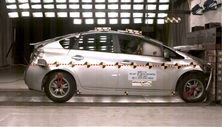
Open safety recalls, the components owners report failing most often, crash-test results and running costs for the 2011 Toyota Prius, assembled from NHTSA and EPA records.
One specific car
Checking one Toyota Prius?
Everything on this page applies to the model as a whole. Run its VIN to decode that exact car, its engine, trim, assembly plant and factory equipment, alongside these records.
Recalls and complaints are filed against a specific model year, so figures differ from one year to the next even within a single generation. See every Toyota Prius year.
NHTSA Recalls
Safety recalls
6 open
NHTSA lists 6 recalls for this make, model and year. Recalls apply to the model, so some may already be fixed on this specific car. A dealer can confirm from the VIN.
HYBRID PROPULSION SYSTEM04/10/2018
Issue: Toyota Motor Engineering & Manufacturing (Toyota) is recalling certain 2010-2014 Toyota Prius and 2012-2014 Toyota Prius V vehicles. Excessive voltage in the Intelligent Power Module (IPM) within the inverter may cause the hybrid system to shut down, causing the vehicle to stall while being driven.
Risk: If the hybrid system shuts down unexpectedly, it can increase the risk of a crash.
Remedy: Toyota will notify owners, and dealers will update the software for the motor/generator control electronic control unit (ECU) and the hybrid control ECU as necessary, free of charge. The recall began January 22, 2019. Owners may contact Toyota customer service at 1-888-270-9371. Toyota's number for this recall is J0V. Note: The software updates in this recall are needed even if the vehicle had the software previously updated under recalls 14V-053 or 15V-449.
Campaign 18V684000
AIR BAGS:SIDE/WINDOW30/06/2016
Issue: Toyota Motor Engineering & Manufacturing (Toyota) is recalling certain model year 2010-2012 Toyota Prius, 2010 and 2012 Toyota Prius Plug-in Hybrid, and 2011-2012 Lexus CT200h vehicles. A weld in the curtain shield air bag inflator may crack causing one or both portions of the inflator to eject into the passenger cabin.
Risk: If either portion of the curtain shield air bag inflator ejects into the passenger cabin, there is an increased risk of injury to vehicle occupants.
Remedy: Toyota will notify owners, and dealers will install retention brackets to the curtain shield air bags, free of charge. The recall began on October 17, 2016. Owners may contact Toyota Customer Service Department at 1-800-331-4331. Toyota's number for this recall is Toyota G0U, and Lexus GLJ.
Campaign 16V487000
SEATS:FRONT ASSEMBLY:SEAT HEATER/COOLER19/11/2014
Issue: Southeast Toyota Distributors, LLC (SET) is recalling certain model year 2010-2011 Prius and Corolla, 2009-2011 Venza, 2006-2010 Avalon, 2007-2010 FJ Cruiser, 2005-2011 Sienna and Sequoia, 2006-2011 Tacoma 4x2 and 4x4, Camry, Highlander, Tundra 4x2 and 4x4, and 2007-2011 Rav4 and 4Runner. The affected vehicles may experience compression of the seat cushion which may damage the seat heater wiring.
Risk: Damage to the seat heater wiring could cause the wires to short, increasing the risk of the seat burning and causing personal injury to the occupant.
Remedy: SET will notify owners, and dealers will disconnect the heaters with copper strand heating elements and refund the purchase price of the seat heater accessory, free of charge. The recall is expected to began in January 2015. Owners may contact SET customer service at 1-866-405-4226.
Campaign 14V743000
HYBRID PROPULSION SYSTEM: INVERTER12/02/2014
Issue: Toyota is recalling certain model year 2010 through 2014 Prius vehicles. In the affected vehicles, the Intelligent Power Module (IPM) inside the inverter module (a component of the hybrid system) contains transistors that may become damaged from high operating temperatures. If this occurs, various warning lamps will be illuminated on the instrument panel and the vehicle will have reduced power allowing it to only drive a short distance.
Risk: The vehicle may enter a fail-safe/limp-home mode that limits the drivability of the vehicle. The hybrid system could also shut down completely resulting in a vehicle stall, increasing the risk of a crash.
Remedy: Toyota will notify owners and dealers will update the software for both the motor/generator control electronic control unit (ECU) and the hybrid control ECU, free of charge. If an owner experiences a failure of the inverter before the vehicle receives updated software, the dealer will repair or replace the inverter assembly with a new one at no charge. The recall began on March 21, 2014. Owners may contact Toyota at 1-800-331-4331.
Campaign 14V053000
SEATS:FRONT ASSEMBLY:SEAT HEATER/COOLER02/06/2016
Issue: Southeast Toyota Distributors, LLC (SET) is recalling certain 2005-2011 4Runner, Highlander, Sequoia, and Sienna, 2005-2010 Avalon and Tundra, 2006-2008 Camry Solara, 2006-2010 Highlander hybrid, 2006-2011 Rav4 and Tacoma, 2007-2010 FJ Cruiser, 2007-2011 Camry hybrid, 2009-2010 Venza, 2010-2012 Prius, 1988-1990 and 2005-2010 Camry, and 1989 and 2009-2010 Corolla vehicles equipped with aftermarket accessory seat heaters with a copper strand heating element. The electrical wiring in the seat heaters may be damaged when the seat cushion is compressed.
Risk: If damaged, the copper strand heating element may short circuit, increasing the risk of a fire.
Remedy: SET will notify owners, and dealers will disconnect the seat heaters, free of charge, and refund the purchase price of the seat heater accessory. The recall began on July 14, 2016. Owners may contact SET customer service at 1-866-405-4226. SET number for this recall is SET16B.
Campaign 16V396000
AIR BAGS:FRONTAL:SENSOR/CONTROL MODULE-INACTIVE16/01/2013
Issue: Southeast Toyota Distributors, LLC (SET) is recalling certain models interspersed through model years 2009 through 2013 as follows: model year 2009-2012 Tacoma, 4Runner, Camry, Camry Hybrid, Prius, and RAV4; model year 2009-2010 Avalon, FJ Cruiser, and Highlander Hybrid; model year 2010-2013 model year Corolla, Sienna and Tundra; model year 2009-2013 Highlander and Venza; model year 2012 Prius V; and model year 2010-2012 Sequoia. During modification by SET to include accessories such as leather seat covers, seat heaters or headrest DVD systems, these vehicles may not have had the passenger seat occupant sensing system calibration tested. Without passing the calibration test, the occupant sensing system may not operate as designed.
Risk: If the front passenger seat occupant sensing system is out of calibration, the front passenger airbags may not deploy or they may deploy inappropriately for the passenger's size and position. This could increase the risk of personal injury during the event of a vehicle crash necessitating airbag deployment.
Remedy: Southeast Toyota will notify owners, and dealers will test the sensitivity of the occupant detection sensors, and recalibrate them as necessary. The recall began on March 21, 2013. Owners may contact Southeast Toyota at 1-800-301-6859.
I am filing this complaint to report an active, severe safety defect involving a sudden, un-warned loss of power braking assist due to a failing factory brake actuator/booster pump assembly. My vehicle is exhibiting the exact internal hydraulic seal failure, pressure drop, and audible hissing/sipping sound outlined in Toyota's prior technical service bulletins. Because the onboard ECU computer only triggers warning lights once a complete, catastrophic failure threshold is met, the system is currently masking the defect from the dashboard. However, the physical hardware is actively failing, requiring the high-pressure pump to run constantly to maintain braking pressure. This component failure dramatically increases stopping distances and presents an immediate, unreasonable risk of a crash. Toyota previously acknowledged this widespread manufacturing defect via Customer Support Program ZJB (20TA02). However, because Toyota chose to manage this critical safety hazard through a time-limited warranty extension rather than a mandatory safety recall, hundreds of thousands of vehicles are now left with a catastrophic braking hazard because the consumer coverage expired in 2022. I urge the NHTSA to open a formal defect petition review to investigate these post-warranty failures and mandate a retroactive safety recall to protect the public.
SERVICE BRAKES08/10/2026
Vehicle Information: 2011 Toyota Prius, 144,000 miles. Component: Hydraulic Service Brakes, Electronic Stability Control, Anti-lock Braking System. Description of Incident: While driving at normal speeds, the vehicle suddenly experienced a severe reduction in braking capability. The dashboard simultaneously illuminated the Brake Warning Light, ABS Light, and Slip/Traction Control Indicator Light. The brake pedal immediately became soft, spongy, and squishy, requiring significantly increased physical foot pressure and a vastly extended distance to bring the vehicle to a stop. Upon inspection, the brake fluid reservoir remains completely full, but the brake booster pump under the hood cycles and buzzes rapidly every 10 seconds while stationary. A diagnostic scan confirmed trouble code C1391 (Brake Actuator Internal Leak). This indicates a severe internal hydraulic pressure bleed inside the braking module. [SEE ATTACHED] This is a known, widespread manufacturing defect previously documented under Toyota Customer Support Program ZJB. The manufacturer has refused to remedy this life-threatening safety defect because a 10-year calendar threshold has passed, despite the vehicle being well under the 150,000-mile limit established by the manufacturer. The vehicle currently poses an immediate safety risk to occupants and the public.
SERVICE BRAKES07/26/2026
Every time I'd press the brakes there'd be an audible "click" noise and then when taking my foot off the brake it'd sound like a manual tire pump being pressed... kind of like air filling / hydraulic sound. This worried me (I don't mess around with brakes). One other thing that would happen is if I pressed the brake hard enough, the automatic braking system would kick in. The Toyota dealership claimed they couldn't hear anything and there were no warning lights so I took it to a reputable local mechanic. They diagnosed it as a bad ABS Actuator / Brake Booster and said it's common with this year of Prius. They also said it was good I brought it in now because it was not severe enough to totally fail (which could have caused an accident) but there was evidence of degradation and they also said the issue was causing sufficient brake fluid to not get where it needs to be.
SERVICE BRAKES06/26/2026
Vehicle Information: Year: 2011 Make: Toyota Model: Prius Mileage at Failure: 58,769 miles Date of First Use: February 20, 2012 Complaint Description: As I was driving on the freeway, my 2011 Toyota Prius brakelights all came on. I pulled off, had it towed to nearest mechanic, who diagnosed a failure involving the brake booster, brake actuator, and ABS system at only 58,769 miles. The vehicle was diagnosed with Diagnostic Trouble Code C1391 (Abnormal Leak of Accumulator Pressure). According to my mechanic, the condition is caused by an internal brake fluid leak within the brake booster assembly with master cylinder. The recommended repair includes replacement of both the brake booster assembly with master cylinder and the brake booster pump assembly. The estimated cost of repair is approximately $4,100. This concerns me because the brake system is a critical safety component, and I believe such a failure at fewer than 60,000 miles is highly unusual and may pose a safety risk to drivers and passengers. Toyota previously issued a Warranty Enhancement Program for this issue, but my vehicle was denied coverage because the program expired on August 31, 2021, and the secondary coverage expired on February 20, 2022, ten years after the vehicle's first use date. Toyota declined any out-of-warranty assistance despite the vehicle's exceptionally low mileage. I am submitting this complaint so that this incident is documented as a potential safety concern involving premature failure of the brake booster and ABS system components on the 2011 Toyota Prius.
SERVICE BRAKES06/18/2026
Shortly after purchasing used last year I had my brake, traction control, ABS, & TPMS lights come on when stopping at a stop light all at once. I went and had it scanned and no codes showed up. I hear a buzzing from the brake actuator/ brake pump every 15 seconds. This all has been going on for almost a year now. Over the weekend a loud buzzing warning alarm came on that will not turn off. I had it checked out and was quoted around 3500 to repair.
SERVICE BRAKES06/16/2026
The ABS actuator (brake booster) went out suddenly. It is 100% available for inspection. It is being towed to M&M Auto Repair in Gaston SC. I was not sure if the car was going to stop when I was trying to figure out what was wrong. The car was acting like it wasn't going to stop until a few seconds later. People online have had a similar problem as me with prius models around my year to 2015. And it was a problem confirmed by the dealership. The component has not been inspected. Only diagnostics were ran. The ABS system light came on. But it would disappear for a long time then come back. So I thought it was a computer error for the longest until it proved to not be one. Because the brakes were working just fine like normal. Other than that, the light itself was playing peekaboo with me, making me believe that it was a computer error since the brakes were working just fine. Then on monday, the car started beeping excessively and the brakes were not working suddenly after being fine over the weekend....with no issues.
SERVICE BRAKES06/02/2026
There is a known problem with the brake booster and skid control that was a part of an customer support extended recall program. Our Prius has very low miles (less that 60,000) so the issue didn't trigger for us until recently. Unfortunately, we are out of the extended recall program of 10 years or 150,000. This doesn't seem fair since it is a known and documented issue from Toyota. Unless we fix the issue, we are at risk of losing braking control. All brake lights on the dash are on and it is currently in the shop.
SERVICE BRAKES,FORWARD COLLISION AVOIDANCE05/09/2026
2011 Prius. 80k miles. Brake booster buzz coming on every 15 seconds now. ABs, traction and brake lights on. I’ve heard of many Prius owners with the same issue. I also have another Prius with the same issue at 120k miles. Brake booster accumulator codes popping up with 80k miles. It is a safety concern as the abs brakes don’t work. Almost every Prius is effected by this.
POWER TRAIN,VEHICLE SPEED CONTROL,SERVICE BRAKES04/27/2026
I was driving my car and suddenly the traction , hand brake and ABS sign started showing up. I usually apply only 10% of force on brake pedal but after this I have to apply almost 60% of force to even slow down the car. Almost 90% force to stop the car It has threatened safety of my family. When diagnosed at autozone they told cannot determine error code. When reading in internet this seems to be common problem in prius. Please help is fixing the issue as it is not at my fault. This seems to be manufacturing defect.
SERVICE BRAKES04/21/2026
The brake cylinder assembly and the brake booster pump assembly failed while driving, which made braking very difficult, caused the regenerative braking to stop working, and caused multiple warning lights to come on. No warning lights, messages, or other symptoms were present prior to the sudden failure. This sudden failure could have easily resulted in a crash and/or death(s). I brought the vehicle to a Toyota dealership, and they confirmed the above issue and replaced the parts. I was told by the dealership, and also read online, that this is a known issue of Toyota for my vehicle and that Toyota extended a warranty years ago; however, the extended warranty is no longer valid for this known defect.
SERVICE BRAKES04/16/2026
Brake Booster went out right at 160000 miles. ABS, emergency parking light, tire pressure light, and others I'm not sure if went on. Brakes felt very mushy and scary to drive.
SERVICE BRAKES02/02/2026
While driving, the Brake, ABS, traction light and other light lit up. The car lurched in an odd way. I can hear the oil pressure pump turn on every 5 seconds. Toyota shops told me the master cylinder and booster pump are failing and that the brakes will stop working while driving, causing an accident.